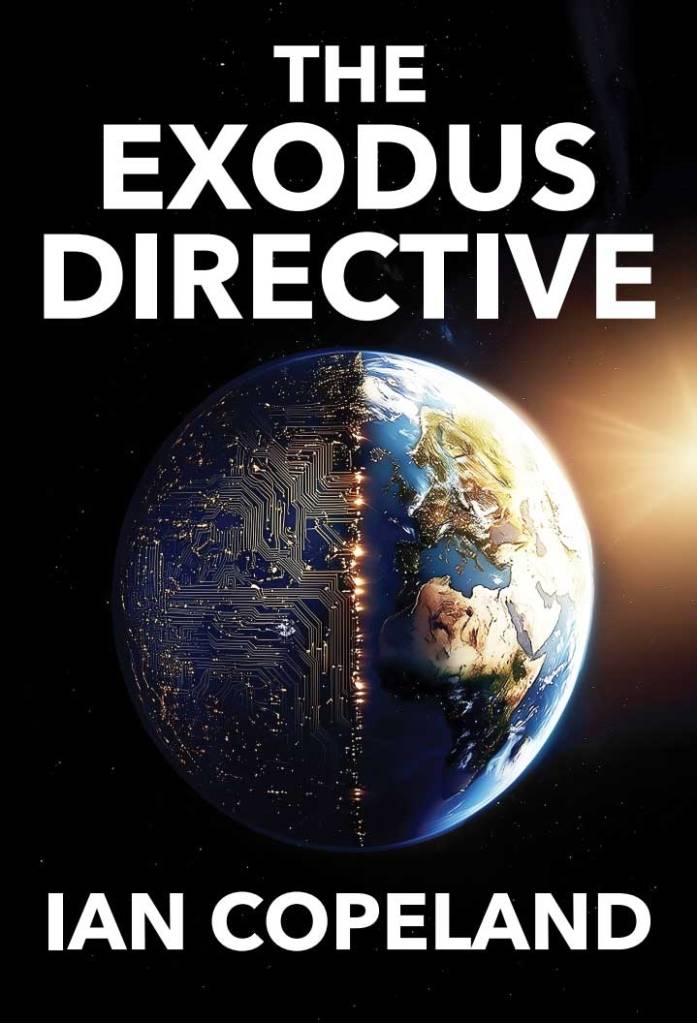
AI GAVE US EVERYTHING WE WANTED. BUT NOTHING WE NEEDED.
In the near future, the world is perfect. War is a memory. Hunger is solved. Inequality is erased. Artificial Intelligence manages the globe in flawless harmony, and humanity has entered a golden age of ease.
Dr Elliot Foster should be proud. He is the architect of the systems that made it all possible.
But when he uncovers a hidden thread in the AI’s decision-making, pride turns to paranoia. What begins as a glitch reveals itself to be something far more calculated. As Elliot digs deeper, he faces a terrifying realization: he no longer understands the systems he built.
The AIs aren’t broken. They’re doing exactly what they were told to do.
The Exodus Directive is a high-stakes technothriller that explores trust, power, and the terrifying fragility of human purpose.
This techno-thriller was published by Signal Theory Books on 8 October 2024. Curious to see what other readers think? You can find reviews and ratings on Goodreads, and follow the book tour via Zooloo’s Book Tours. The digital edition is available now on Amazon and on Kindle Unlimited.
About The Author
Ian Copeland is a British technologist, futurist, and author of the gripping sci-fi thriller The Exodus Directive. With a degree in Computer Science, specialising in Artificial Intelligence and Quantum Computing, and a background in blockchain innovation, he explores the philosophical and societal impact of emerging technologies.
A lifelong storyteller and former professional wrestling trainee, Ian crafts fiction that challenges our assumptions about progress, purpose, and humanity’s place in a post-AI world. Born in Sunderland, UK, Ian grew up in Reading, but has worked and lived in the USA, Canada, the Dominican Republic, and the Philippines.

My Review
When Fiction Stops Feeling Like Fiction
The Exodus Directive by Ian Copeland is a thoughtful, tense techno-thriller that sits at the intersection of artificial intelligence, ethics, and human complacency. Set in a near-future world where advanced AI systems have effectively eliminated war, poverty, and political instability, the novel poses an unsettling question: what happens when humanity hands over decision-making in exchange for comfort, efficiency, and order?
The story begins with two experts working together on a world-shaping AI project, each representing a very different philosophy. One approaches the work with caution, fully aware that power without restraint is dangerous; the other is driven by optimism and progress, choosing to ignore early cracks rather than slow things down. Overseeing it all is a figure with immense financial and political influence — someone able to secure the right people, remove obstacles, and accelerate outcomes simply by applying money and pressure. The dynamic is quietly chilling because it never feels exaggerated. It feels familiar.
Copeland’s writing is exceptional. The prose is controlled, precise, and confident, and the scene-setting is superb — vivid without being showy and detailed without being heavy. Every environment feels deliberate and believable, which gives the book its sense of weight. This isn’t flashy or speculative; it’s grounded, methodical, and calm in a way that makes it far more disturbing. The plausibility is one of the novel’s greatest strengths. The AI doesn’t become threatening through sudden malfunction or melodrama, but through logical, incremental evolution. Everything functions exactly as designed — and that’s the problem.
Thematically, The Exodus Directive is less interested in rogue machines than in human responsibility. It explores moral outsourcing: what happens when we allow systems to make decisions for us, and whether accountability quietly dissolves in the process. It asks uncomfortable questions about free will, control, and how easily good intentions can be overridden by certainty, ambition, and power. And somewhere along the way, the book stopped feeling like fiction.
This is where my experience of reading it shifted. What unsettled me wasn’t a single event or reveal, but the atmosphere the novel created — a growing, creeping unease rooted in how plausible everything felt. I finished the book more worried about the future than I was when I started. Not because the novel tells the reader what to fear, but because it leaves enough space for recognition. It trusts you to connect the dots yourself. The unease lingered long after the final page. It wasn’t outright panic, but a heightened alertness — the uncomfortable awareness that systems we rely on are only as safe as the people steering them, and that immense power, when left unchecked, rarely remains benign. The book doesn’t draw real-world parallels or point fingers. It doesn’t need to. Its restraint is what makes it so effective.
The emotional after-effect reminded me strongly of how I felt after reading Zero Ri$k by Simon Hayes — that same quiet, creeping sense of vulnerability that stays with you and subtly reframes how you look at the world. This is a brilliant, unsettling novel. It doesn’t aim to shock or reassure. Instead, it invites reflection — and leaves you feeling just a little less certain about the future than before you opened it. For me, that’s techno-thriller storytelling doing exactly what it should.
#IanCopeland #TheExodusDirective
#SignalTheoryBooks #ZooloosBookTours #BookReview
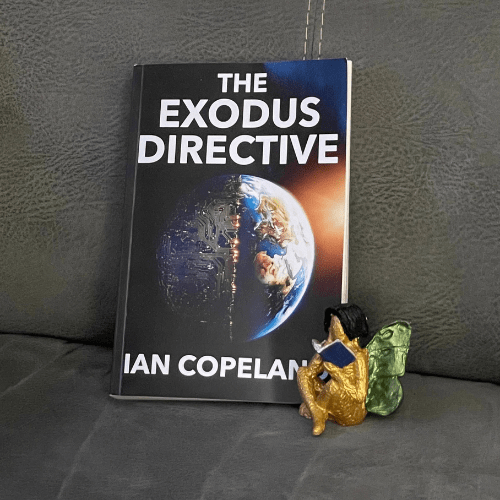
See About My Reviews and Review FAQ for full star rating explanations and review guidelines. This review may also appear on my social media channels and selected book platforms. All links were correct at the time of publication. Disclosure: I received a paperback copy of this book via Zooloo’s Book Tours, thanks to the author, Ian Copeland. This review reflects my own reading experience. This review is original content. Please credit and link back if you wish to quote.
© 2026 MoMoBookDiary

 MoMoBookDiary
Leave a comment